
Source: Roblox Creator Hub · CC BY 4.0 · View source · Code samples: MIT Imported 2026-10-03. Formatting adapted for this site.
SurfaceAppearance
Inherits from: Instance → Object
SurfaceAppearance objects let you override the appearance of a MeshPart with advanced graphics options. Most notably, it can apply a set of Physically‑Based Rendering (PBR) texture images, or maps, on a single object. Combining multiple texture maps can more accurately simulate color, roughness, and reflectivity in any lighting environment and can enhance the visual elements of your assets and environment; see PBR Textures for more details.

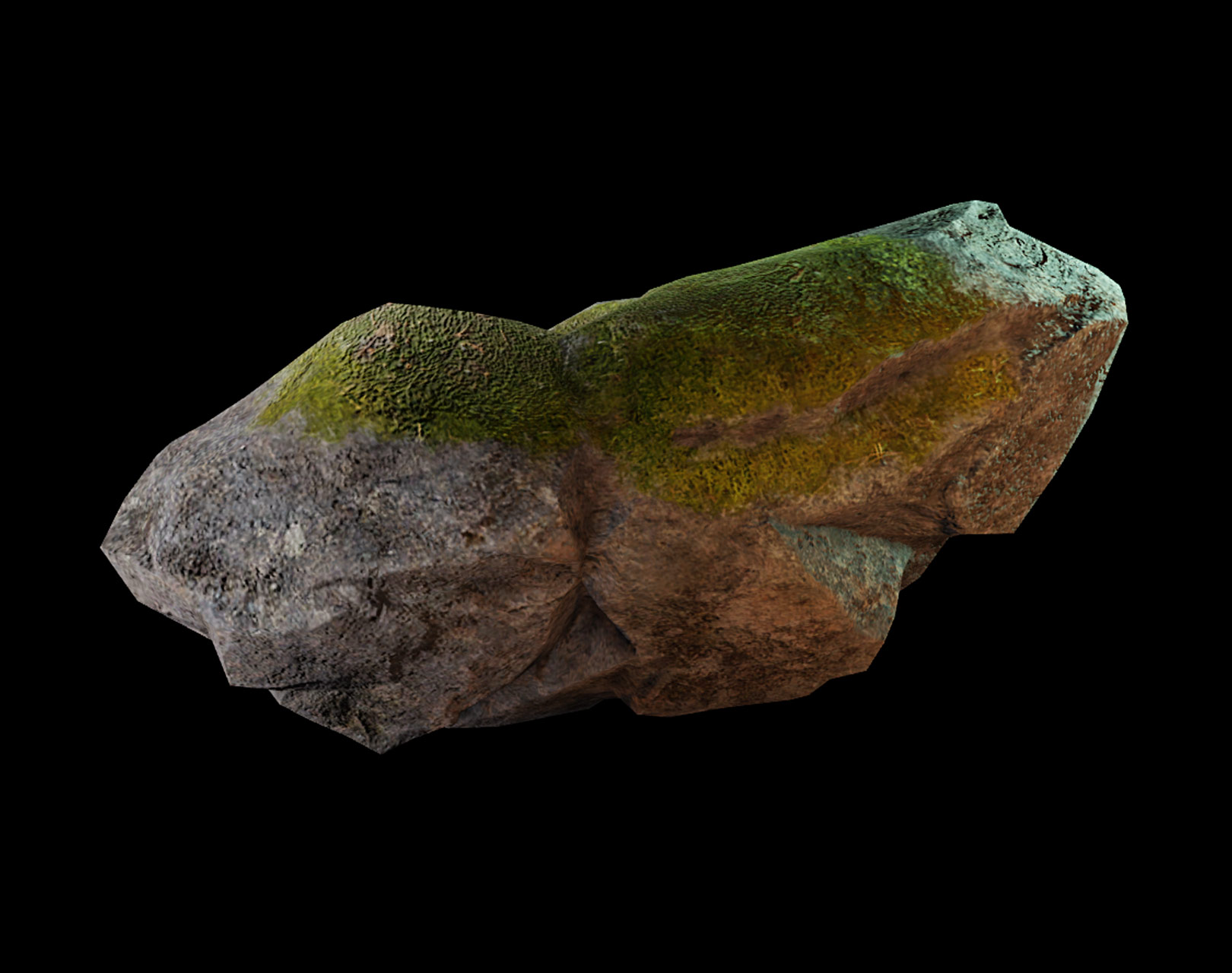
Appearance of this object on a MeshPart depends on the user's device and graphics quality level. For best results, you may want to preview your content with different quality level settings.
Note that most SurfaceAppearance properties cannot be modified by scripts, as the necessary pre-processing is usually too expensive during runtime.
Inherits from: Instance
Memory category: Instances
Properties
| Name | Type / Returns | Description |
|---|---|---|
| SurfaceAppearance.AlphaMode | AlphaMode | Determines how the alpha channel of the SurfaceAppearance.ColorMap is used. |
| SurfaceAppearance.Color | Color3 | Applies a tint to your existing colormap. Set directly with color picker or programmatically with Color3. |
| SurfaceAppearance.ColorMap | ContentId | Determines the color and opacity of the surface. |
| SurfaceAppearance.ColorMapContent | Content | Content object that determines the color and opacity of the surface. |
| SurfaceAppearance.EmissiveMaskContent | Content | Determines the emissivity across the surface. |
| SurfaceAppearance.EmissiveStrength | float | Determines the strength of emissive contribution. |
| SurfaceAppearance.EmissiveTint | Color3 | Determines the tinting color for emissive contribution. |
| SurfaceAppearance.MetalnessMap | ContentId | Determines which parts of the surface are metal or non-metal. |
| SurfaceAppearance.MetalnessMapContent | Content | Content object that determines which parts of the surface are metal or non-metal. |
| SurfaceAppearance.NormalMap | ContentId | Modifies the lighting of the surface by adding bumps, dents, cracks, and curves. |
| SurfaceAppearance.NormalMapContent | Content | Content object that modifies the lighting of the surface by adding bumps, dents, cracks, and curves. |
| SurfaceAppearance.ResampleMode | ResamplerMode | Selects the texture resampling mode used for the surface's texture maps. |
| SurfaceAppearance.RoughnessMap | ContentId | Determines the apparent roughness across the surface. |
| SurfaceAppearance.RoughnessMapContent | Content | Content object that determines the apparent roughness across the surface. |
| SurfaceAppearance.TexturePackContent | Content | Engine-managed Content that stores the compressed runtime texture data for the surface appearance. |
Inherited from Instance
| Name | Type / Returns | Description |
|---|---|---|
| Instance.Archivable | boolean | Determines if an Instance and its descendants can be cloned using Instance:Clone(), and can be saved/published. |
| Instance.archivable | boolean | |
| Instance.Capabilities | SecurityCapabilities | The set of capabilities allowed to be used for scripts inside this container. |
| Instance.IsInSandbox | boolean | Indicates whether the instance is inside a sandboxed container. |
| Instance.Name | string | A non-unique identifier of the Instance. |
| Instance.Parent | Instance | Determines the hierarchical parent of the Instance. |
| Instance.PredictionMode | PredictionMode | Reflects the client-side prediction mode applied to the instance under server-authoritative physics. |
| Instance.RobloxLocked | boolean | A deprecated property that used to protect CoreGui objects. |
| Instance.Sandboxed | boolean | When enabled, the instance can only access abilities in its Capabilities list. |
| Instance.UniqueId | UniqueId | A unique identifier for the instance. |
Inherited from Object
| Name | Type / Returns | Description |
|---|---|---|
| Object.ClassName | string | A read-only string representing the class this Object belongs to. |
| Object.className | string |
SurfaceAppearance.AlphaMode
This property determines how the alpha channel of the SurfaceAppearance.ColorMap is used.
When set to Transparency and the MeshPart.Transparency is set to 0, opaque pixels in the ColorMap will render as completely opaque in the 3D scene. This combination works better with depth-based effects and occlusion.
When set to Transparency and the MeshPart.Transparency is set to at least 0.02, a different blending method is used that can better represent smooth transparency gradients and soft edges. This combination does not support all effects and occlusion may not be perfect.
See here for more information.
| Field | Value |
|---|---|
| type | AlphaMode |
| security | {"read":"None","write":"None"} |
| thread safety | ReadSafe |
| category | Appearance |
| serialization | {"can_load":true,"can_save":true} |
| capabilities | ["Basic"] |
SurfaceAppearance.Color
Applies a tint to your existing colormap. Set directly with color picker or programmatically with Color3.
| Field | Value |
|---|---|
| type | Color3 |
| security | {"read":"None","write":"None"} |
| thread safety | ReadSafe |
| category | Appearance |
| serialization | {"can_load":true,"can_save":true} |
| capabilities | ["Basic"] |
SurfaceAppearance.ColorMap
This property determines the color and opacity of the surface. This texture is sometimes called the albedo texture. The alpha channel of this texture controls its opacity, which behaves differently based on the SurfaceAppearance.AlphaMode setting.
See here for more information.
| Field | Value |
|---|---|
| type | ContentId |
| security | {"read":"PluginSecurity","write":"PluginSecurity"} |
| thread safety | ReadSafe |
| category | Appearance |
| serialization | {"can_load":true,"can_save":true} |
| capabilities | ["Basic"] |
SurfaceAppearance.ColorMapContent
A Content that determines the color and opacity of the surface (sometimes called the albedo texture). The content can hold an asset URI or a reference to an EditableImage object.
The alpha channel of the texture controls its opacity, which behaves differently based on the SurfaceAppearance.AlphaMode setting. It defaults to an empty content, in which case no color map is applied. Assigning an EditableImage is useful for dynamically generating or modifying textures at runtime, such as in avatar customization and other in-experience content creation workflows.
| Field | Value |
|---|---|
| type | Content |
| tags | ["Hidden"] |
| security | {"read":"None","write":"PluginSecurity"} |
| thread safety | ReadSafe |
| category | Appearance |
| serialization | {"can_load":true,"can_save":true} |
| capabilities | ["Basic"] |
SurfaceAppearance.EmissiveMaskContent
This property determines the apparent emissivity across the surface. An emissive mask is a grayscale image where black pixels correspond to no emissivity, and white pixels correspond to full emissivity.
The emissive contribution gets added to total lighting contribution across the surface, and the sum gets multiplied by the albedo texture, which would be sampled from ColorMap if provided.
| Field | Value |
|---|---|
| type | Content |
| security | {"read":"None","write":"PluginSecurity"} |
| thread safety | ReadSafe |
| category | Appearance |
| serialization | {"can_load":true,"can_save":true} |
| capabilities | ["Basic"] |
SurfaceAppearance.EmissiveStrength
This value is a multiplier to control how strong the emissive contribution is across the surface. If the final contribution of emissives goes beyond supported dynamic range, it will get clamped; this could result in emissive contribution appearing all white when using large emissive strength values. Since this value is a multiplier, the maximum value to prevent clamping depends on all of the other contributing values, including EmissiveTint, ColorMap and combined lighting contribution.
| Field | Value |
|---|---|
| type | float |
| security | {"read":"None","write":"None"} |
| thread safety | ReadSafe |
| category | Appearance |
| serialization | {"can_load":true,"can_save":true} |
| capabilities | ["Basic"] |
SurfaceAppearance.EmissiveTint
This value is an RGB color for tinting emissive contribution.
| Field | Value |
|---|---|
| type | Color3 |
| security | {"read":"None","write":"None"} |
| thread safety | ReadSafe |
| category | Appearance |
| serialization | {"can_load":true,"can_save":true} |
| capabilities | ["Basic"] |
SurfaceAppearance.MetalnessMap
This property determines which parts of the surface are metal or non-metal. The metalness map is a grayscale image where black pixels correspond to non-metals and white pixels correspond to metals.
Metals only reflect light the same color as the metal, and they reflect much more light than non-metals. Most pixels in a metalness map will be either pure black or pure white, while values in between can be used to simulate dirt or grunge on top of an underlying metal area.
When Lighting.EnvironmentSpecularScale is 0, metalness has no effect. For the most realistic reflections, it's recommended to set Lighting.EnvironmentSpecularScale and Lighting.EnvironmentDiffuseScale to 1, as well as Lighting.Ambient and Lighting.OutdoorAmbient to (0, 0, 0).
See here for more information.
| Field | Value |
|---|---|
| type | ContentId |
| security | {"read":"PluginSecurity","write":"PluginSecurity"} |
| thread safety | ReadSafe |
| category | Appearance |
| serialization | {"can_load":true,"can_save":true} |
| capabilities | ["Basic"] |
SurfaceAppearance.MetalnessMapContent
A Content that determines which parts of the surface are metal or non-metal. The metalness map is a grayscale image where black pixels correspond to non-metals and white pixels correspond to metals. The content can hold an asset URI or a reference to an EditableImage object.
Metals only reflect light the same color as the metal, and they reflect much more light than non-metals. Most pixels in a metalness map will be either pure black or pure white, while values in between can be used to simulate dirt or grunge on top of an underlying metal area.
When Lighting.EnvironmentSpecularScale is 0, metalness has no effect. Defaults to an empty content, in which case no metalness map is applied.
| Field | Value |
|---|---|
| type | Content |
| tags | ["Hidden"] |
| security | {"read":"None","write":"PluginSecurity"} |
| thread safety | ReadSafe |
| category | Appearance |
| serialization | {"can_load":true,"can_save":true} |
| capabilities | ["Basic"] |
SurfaceAppearance.NormalMap
This property modifies the lighting of the surface by adding bumps, dents, cracks, and curves, without adding more polygons. The normal map is an RGB image that modifies the surface's normal vector used for lighting calculations. Its R, G, and B channels correspond to the X, Y, and Z components of the local surface vector respectively, and byte values of 0 and 255 for each channel correspond linearly to normal vector components of -1 and 1.016 respectively. This range is stretched slightly from -1 to 1 so that a byte value of 127 maps to exactly 0.
The normal vector's Z axis is always defined as the direction of the underlying mesh's normal. A uniform (127, 127, 255) image translates to a completely flat normal map where the normal is everywhere perpendicular to the mesh surface; this format is referred to as a "tangent space" normal map. Note that Roblox does not support world space or object space normal maps.
Incorrectly flipped normal components can make bumps appear like indents. If you import a normal map and notice the lighting looks off, you may need to invert the G channel of the image. The X and Y axes of the tangent space frame correspond to the X and Y directions in the image after it's transformed by the mesh UVs. If you view your normal map in an image editor as if it were displayed on a surface, normals pointing towards the right side of the screen should appear more red, and normals pointing towards the top side of your screen should appear more green. The terms "DirectX format" and "OpenGL format" are sometimes used to describe whether the G channel of the normal map is inverted or not (Roblox expects the OpenGL format).
Roblox also expects imported meshes to include tangents. Modeling software may also refer to this as "tangent space" information. If you apply a normal map and it does not seem to make any visual difference, you may need to re-export your mesh along with its tangent information from the modeling software.
See here for more information.
| Field | Value |
|---|---|
| type | ContentId |
| security | {"read":"PluginSecurity","write":"PluginSecurity"} |
| thread safety | ReadSafe |
| category | Appearance |
| serialization | {"can_load":true,"can_save":true} |
| capabilities | ["Basic"] |
SurfaceAppearance.NormalMapContent
A Content that modifies the lighting of the surface by adding bumps, dents, cracks, and curves, without adding more polygons. The normal map is an RGB image that modifies the surface's normal vector used for lighting calculations, where the R, G, and B channels correspond to the X, Y, and Z components of the local surface vector respectively. The content can hold an asset URI or a reference to an EditableImage object.
Roblox expects tangent-space normal maps in the "OpenGL format" (the G channel is not inverted), and imported meshes must include tangent information. Defaults to an empty content, in which case no normal map is applied.
| Field | Value |
|---|---|
| type | Content |
| tags | ["Hidden"] |
| security | {"read":"None","write":"PluginSecurity"} |
| thread safety | ReadSafe |
| category | Appearance |
| serialization | {"can_load":true,"can_save":true} |
| capabilities | ["Basic"] |
SurfaceAppearance.ResampleMode
Determines how the surface's texture maps look when they are scaled. When set to the default ResamplerMode.Default, the textures smooth out using bilinear filtering when displayed larger or smaller than their size in texture memory. When set to Pixelated, the textures preserve the sharp edges of pixels using nearest-neighbor filtering. Defaults to ResamplerMode.Default.
| Field | Value |
|---|---|
| type | ResamplerMode |
| security | {"read":"None","write":"None"} |
| thread safety | ReadSafe |
| category | Appearance |
| serialization | {"can_load":true,"can_save":true} |
| capabilities | ["Basic"] |
SurfaceAppearance.RoughnessMap
This property determines the apparent roughness across the surface. The roughness map is a grayscale image where black pixels correspond to a maximally smooth surface, and white pixels correspond to a maximally rough surface.
Note that surface roughness works on a very small scale. Reflections on smooth surfaces are sharp and concentrated, while reflections on rough surfaces are more blurry and dispersed.
See here for more information.
| Field | Value |
|---|---|
| type | ContentId |
| security | {"read":"PluginSecurity","write":"PluginSecurity"} |
| thread safety | ReadSafe |
| category | Appearance |
| serialization | {"can_load":true,"can_save":true} |
| capabilities | ["Basic"] |
SurfaceAppearance.RoughnessMapContent
A Content that determines the apparent roughness across the surface. The roughness map is a grayscale image where black pixels correspond to a maximally smooth surface, and white pixels correspond to a maximally rough surface. The content can hold an asset URI or a reference to an EditableImage object.
Surface roughness works on a very small scale. Reflections on smooth surfaces are sharp and concentrated, while reflections on rough surfaces are more blurry and dispersed. Defaults to an empty content, in which case no roughness map is applied.
| Field | Value |
|---|---|
| type | Content |
| tags | ["Hidden"] |
| security | {"read":"None","write":"PluginSecurity"} |
| thread safety | ReadSafe |
| category | Appearance |
| serialization | {"can_load":true,"can_save":true} |
| capabilities | ["Basic"] |
SurfaceAppearance.TexturePackContent
Managed by the engine and not intended to be set directly. A Content that holds the compressed runtime texture data for the surface appearance. It is the backing storage for SurfaceAppearance.TexturePack: when the object is published, the engine bakes its individual texture maps into a single texture pack asset and stores the resulting reference here.
Requires elevated permissions to read (RobloxScript security) and is writable only by the engine (RobloxEngine security). Defaults to an empty content.
| Field | Value |
|---|---|
| type | Content |
| security | {"read":"RobloxScriptSecurity","write":"RobloxEngineSecurity"} |
| thread safety | ReadSafe |
| category | Appearance |
| serialization | {"can_load":true,"can_save":true} |
| capabilities | ["Basic"] |
Methods
Inherited from Instance
| Name | Type / Returns | Description |
|---|---|---|
| Instance:AddTag | () | Applies a tag to the instance. |
| Instance:children | Instances | Returns an array of the object's children. |
| Instance:ClearAllChildren | () | This method destroys all of an instance's children. |
| Instance:Clone | Instance | Create a copy of an instance and all its descendants, ignoring instances that are not Archivable. |
| Instance:clone | Instance | |
| Instance:Destroy | () | Sets the Instance.Parent property to nil, locks the Instance.Parent property, disconnects all connections, and calls Destroy() on all children. |
| Instance:destroy | () | |
| Instance:FindFirstAncestor | Instance? | Returns the first ancestor of the Instance whose Instance.Name is equal to the given name. |
| Instance:FindFirstAncestorOfClass | Instance? | Returns the first ancestor of the Instance whose Object.ClassName is equal to the given className. |
| Instance:FindFirstAncestorWhichIsA | Instance? | Returns the first ancestor of the Instance for whom Object:IsA() returns true for the given className. |
| Instance:FindFirstChild | Instance? | Returns the first child of the Instance found with the given name. |
| Instance:findFirstChild | Instance | |
| Instance:FindFirstChildOfClass | Instance? | Returns the first child of the Instance whose ClassName is equal to the given class name. |
| Instance:FindFirstChildWhichIsA | Instance? | Returns the first child of the Instance for whom Object:IsA() returns true for the given className. |
| Instance:FindFirstDescendant | Instance? | Returns the first descendant found with the given Instance.Name. |
| Instance:GetActor | Actor? | Returns the Actor associated with the Instance, if any. |
| Instance:GetAttribute | Variant | Returns the value which has been assigned to the given attribute name. |
| Instance:GetAttributeChangedSignal | RBXScriptSignal | Returns an event that fires when the given attribute changes. |
| Instance:GetAttributes | Dictionary | Returns a dictionary of the instance's attributes. |
| Instance:GetChildren | Instances | Returns an array containing all of the instance's children. |
| Instance:getChildren | Instances | |
| Instance:GetDebugId | string | Returns a coded string of the debug ID used internally by Roblox. |
| Instance:GetDescendants | Instances | Returns an array containing all of the descendants of the instance. |
| Instance:GetFullName | string | Returns a string describing the instance's ancestry. |
| Instance:GetStyled | Variant | Returns the styled or explicitly modified value of the specified property, or else the default property value if it hasn't been styled/modified. |
| Instance:GetStyledPropertyChangedSignal | RBXScriptSignal | Returns an event that fires when the given style property changes on the instance. |
| Instance:GetTags | Array | Gets an array of all tags applied to the instance. |
| Instance:HasTag | boolean | Check whether the instance has a given tag. |
| Instance:IsAncestorOf | boolean | Returns true if an Instance is an ancestor of the given descendant. |
| Instance:IsDescendantOf | boolean | Returns true if an Instance is a descendant of the given ancestor. |
| Instance:isDescendantOf | boolean | |
| Instance:IsPropertyModified | boolean | Returns true if the value stored in the specified property is not equal to the code-instantiated default. |
| Instance:QueryDescendants | Instances | Returns an array containing all descendants of the instance that match the selector string. |
| Instance:Remove | () | Sets the object's Parent to nil, and does the same for all its descendants. |
| Instance:remove | () | |
| Instance:RemoveTag | () | Removes a tag from the instance. |
| Instance:ResetPropertyToDefault | () | Resets a property to its default value. |
| Instance:SetAttribute | () | Sets the attribute with the given name to the given value. |
| Instance:WaitForChild | Instance | Returns the child of the Instance with the given name. If the child does not exist, it will yield the current thread until it does. |
Inherited from Object
| Name | Type / Returns | Description |
|---|---|---|
| Object:GetPropertyChangedSignal | RBXScriptSignal | Get an event that fires when a given property of the object changes. |
| Object:IsA | boolean | Returns true if an object's class matches or inherits from a given class. |
| Object:isA | boolean |
Events
Inherited from Instance
| Name | Type / Returns | Description |
|---|---|---|
| Instance.AncestryChanged | Fires when the Instance.Parent property of this object or one of its ancestors is changed. | |
| Instance.AttributeChanged | Fires whenever an attribute is changed on the Instance. | |
| Instance.ChildAdded | Fires after an object is parented to this Instance. | |
| Instance.childAdded | ||
| Instance.ChildRemoved | Fires after a child is removed from this Instance. | |
| Instance.DescendantAdded | Fires after a descendant is added to the Instance. | |
| Instance.DescendantRemoving | Fires immediately before a descendant of the Instance is removed. | |
| Instance.Destroying | Fires immediately before (or is deferred until after) the instance is destroyed via Instance:Destroy(). | |
| Instance.StyledPropertiesChanged | Fires whenever any style property is changed on the instance, including when a property is set to nil. |
Inherited from Object
| Name | Type / Returns | Description |
|---|---|---|
| Object.Changed | Fires immediately after a property of the object changes, with some limitations. |