
Source: Roblox Creator Hub · CC BY 4.0 · View source · Code samples: MIT Imported 2026-10-03. Formatting adapted for this site.
Lighting and effects
The Lighting container services let you control and customize a game's environment such as lighting, atmosphere, and clouds. You can also apply post-processing effects to adjust how the game appears on the screen.
Global lighting
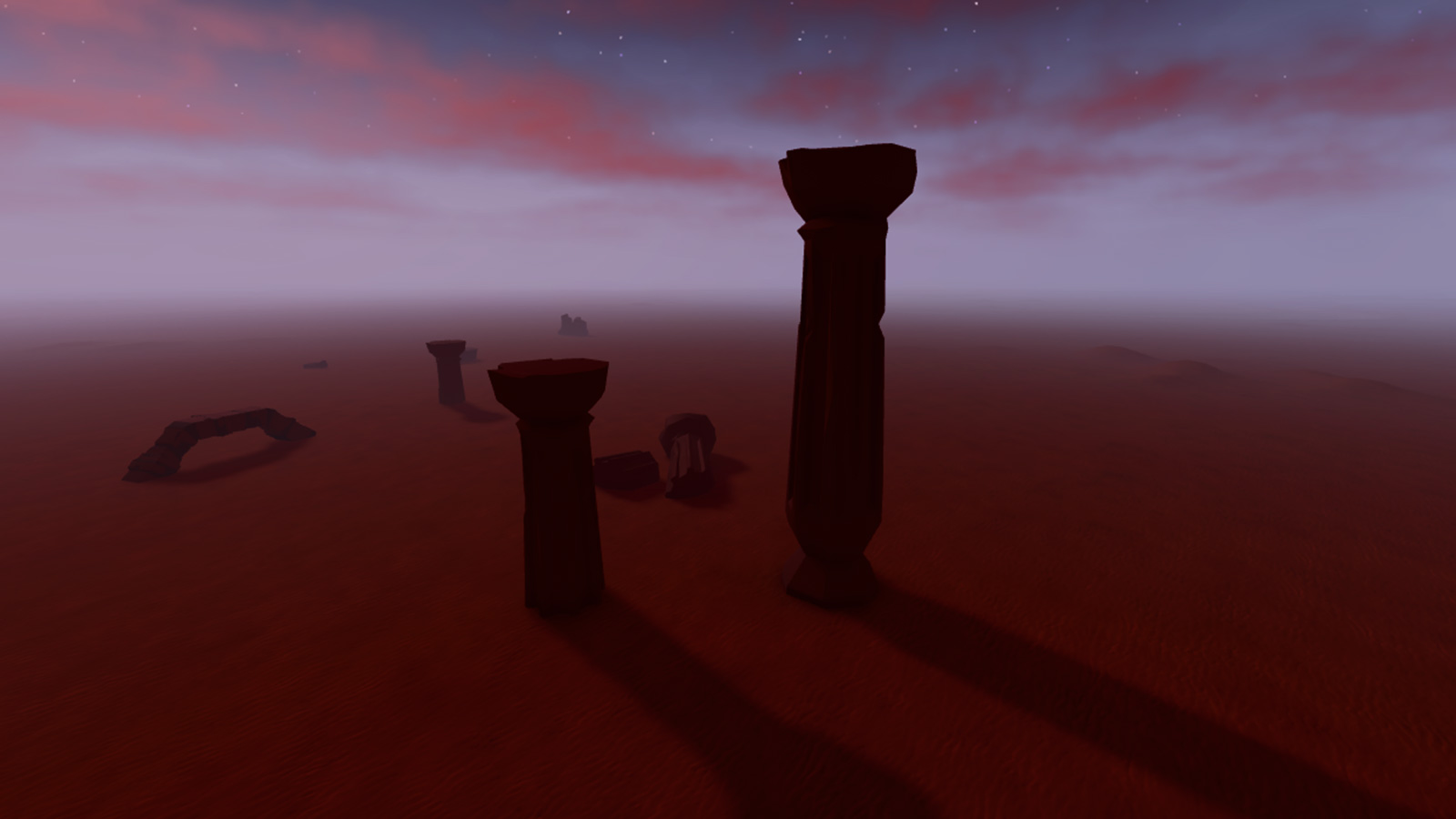
The Lighting service contains properties that you can adjust to update the global lighting in a game, such as the ClockTime and Brightness.
ClockTime = 0
ClockTime = 6.3

Brightness = 0.5
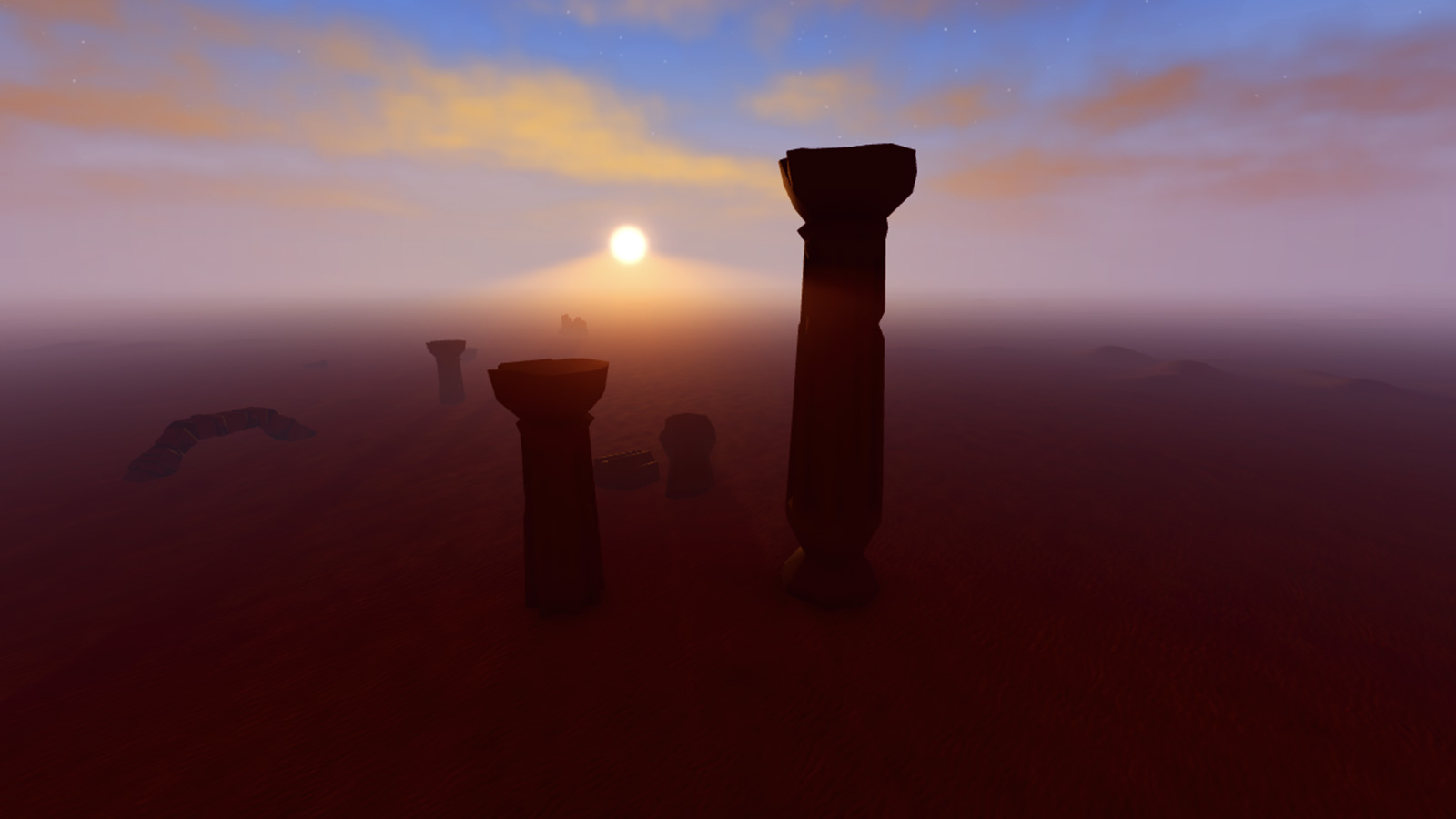
Brightness = 3.75

Note
In addition to global lighting, you can create and attach light sources to parts or attachments to simulate objects like lamps, torches, spotlights, or TV screens.
Atmospheric effects
Atmospheric effects simulate realistic environments by scattering sunlight in unique ways. Using the Atmosphere object in the Lighting service, you can control air particle density, simulate haze or glare, set an atmosphere's color, and more.

Atmospheric effects used to render a brilliant sunset scene
Clouds and skies
By default, the Sky object forms a skybox with celestial bodies such as a sun, moon, and stars. In addition, you can adjust the cloud cover, density, and color properties of the Clouds object to render realistic, dynamic clouds that drift slowly across the sky through global wind.
Wind blowing dynamic clouds across the sky
Post-processing effects
Post-processing effects are customizable filters that allow you to quickly enrich the visuals of your game. Using the post-processing effect objects in the Lighting service or Camera, you can:
- Simulate a camera viewing a bright light and exaggerate its glow.
- Apply a Gaussian blur to the entirety of your game or add a blur to parts of your game that aren't in focus.
- Enhance an environment's appearance to create a specific mood through hue.
- Render a halo of light that moves with the sun.
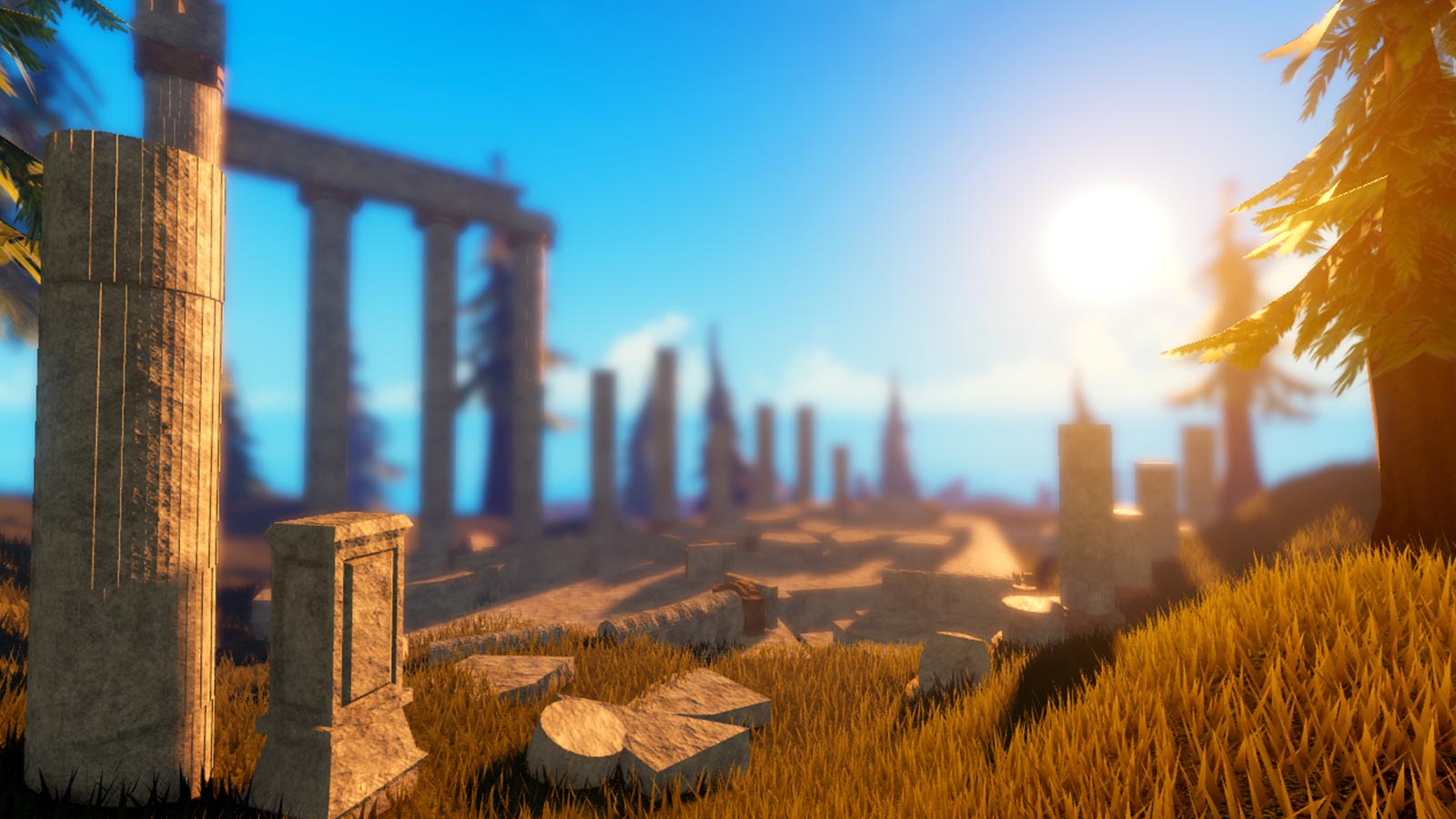
Landscape with depth-of-field effect applied, simulating distance blur