
Source: Roblox Creator Hub · CC BY 4.0 · View source · Code samples: MIT Imported 2026-10-03. Formatting adapted for this site.
3D workspace
Workspace is a container service that holds objects that you want the Roblox Engine to render in the 3D world. You typically will add these objects to the workspace:
BasePartobjects, which includes bothPartandMeshPartobjects.Attachmentobjects, which you can attach to special effect generators like aParticleEmitter, UI objects like aBillboardGui, physicalConstraints, and more.Modelobjects that organize geometric groupings.Scriptobjects that are parented by other objects in the workspace. Scripts aren't rendered but can affect another object's rendering.
Parts
Part objects represent the primitive building blocks in Roblox. By default, all parts have their physics simulated and are rendered if they appear in the 3D workspace. Parts can take the shape of blocks, spheres, cylinders, wedges, or corner wedges. In addition, TrussPart acts as a truss beam that characters can climb like a ladder.
<img src="https://prod.docsiteassets.roblox.com/assets/modeling/parts/Basic-Part-Block.png" alt="A single Block part." /><img src="https://prod.docsiteassets.roblox.com/assets/modeling/parts/Basic-Part-Sphere.png" alt="A single Sphere part." /><img src="https://prod.docsiteassets.roblox.com/assets/modeling/parts/Basic-Part-Cylinder.png" alt="A single Cylinder part." /><img src="https://prod.docsiteassets.roblox.com/assets/modeling/parts/Basic-Part-Wedge.png" alt="A single Wedge part." /><img src="https://prod.docsiteassets.roblox.com/assets/modeling/parts/Basic-Part-Corner-Wedge.png" alt="A single Corner Wedge part." />You can also apply solid modeling operations to parts, such as union or negate, to combine them into something more complex like bowls or hollow pipes.
Meshes
A MeshPart is an object that represents a mesh (a collection of vertices, edges, and faces that make up a 3D object). You typically create meshes using third-party software such as Blender or Maya, then import them as a MeshPart using Studio.
Meshes can include far more detail than any solid modeling you can do in Studio. They can also have internal rigs and textures, allowing you to create lifelike objects that you can pose and animate.
<img src="https://prod.docsiteassets.roblox.com/assets/modeling/meshes/Mesh-Textured.jpg" alt="A high-quality treasure chest mesh with a texture." />Mesh with texture
<img src="https://prod.docsiteassets.roblox.com/assets/modeling/meshes/Mesh-SurfaceAppearance.jpg" alt="A realistic looking leafy bush with shadows and depth."/>Mesh with SurfaceAppearance
Terrain
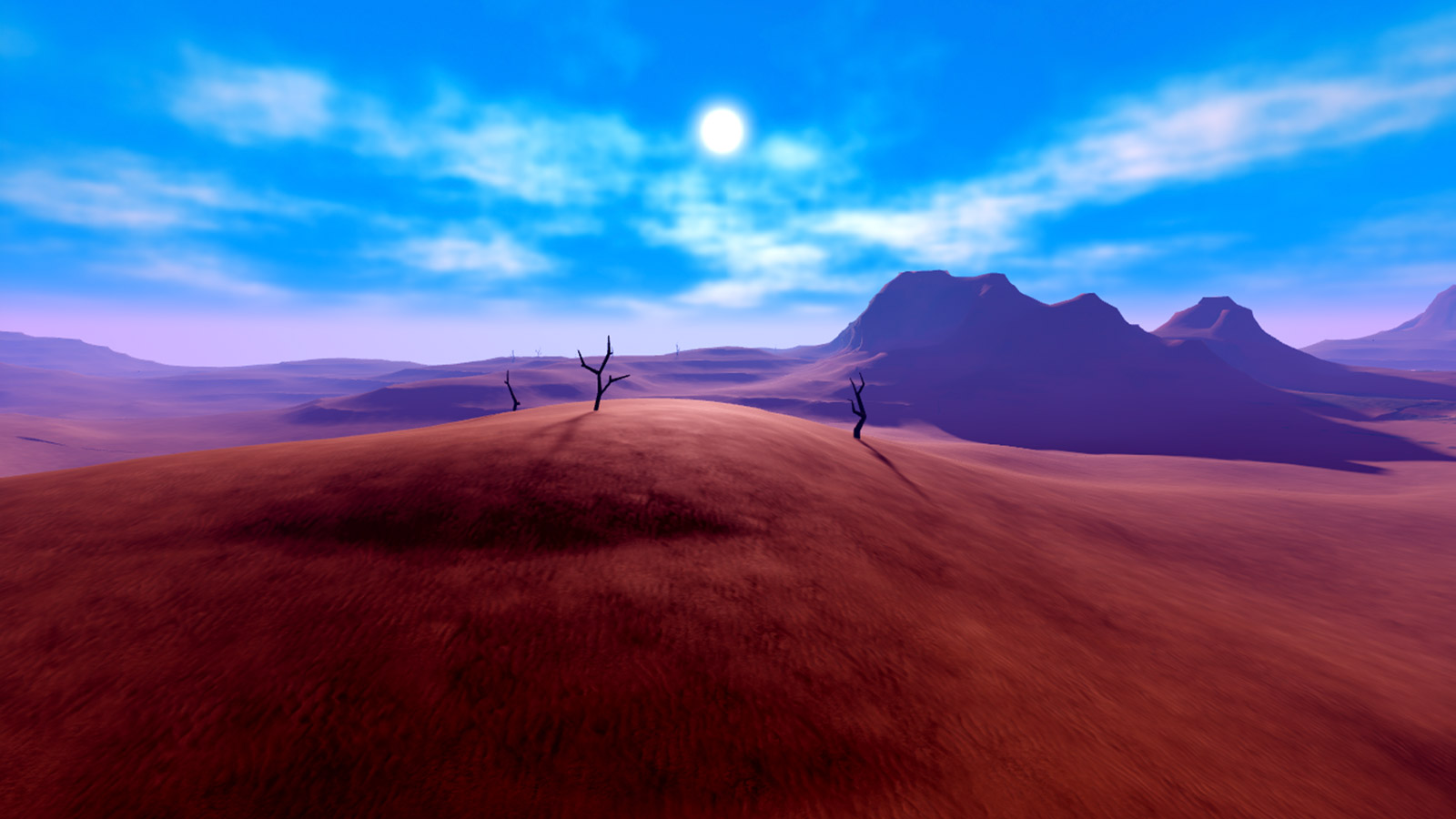
The Terrain object allows you to generate and sculpt detailed and realistic terrain environments, such as mountains, bodies of water, grass-covered hills, or a flat desert. Using the Terrain Editor, you can easily generate and alter large regions of terrain.
Models
A Model is a container object for geometric groupings, such as BasePart, Motor6D objects, and other models. Models can be simple groupings or you can set a primary part within the model, so that it functions as an assembly, which the physics engine treats as a single rigid body. Models can also contain scripts that act on the individual objects of the model.
<img src="https://prod.docsiteassets.roblox.com/assets/modeling/model-objects/Model-Example-3D.jpg" alt="A humanoid model of a creepy girl with four red eyes standing in an A pose. She wears a maroon dress with webs and bright red stockings." />A model named Octavia
<img src="https://prod.docsiteassets.roblox.com/assets/modeling/model-objects/Model-Example-Hierarchy.png" width="320" alt="A close up view of the model's children in the Explorer window that comprise the model." />The groupings that comprise the model
Workspace access in scripts
Within a script, you can access a place's Workspace in three different ways, all of which are valid.
game:GetService("Workspace")workspacegame.Workspace
From there, you can carry out a large set of use cases to script logic for your games and create dynamic worlds and interactions. For example:
- Obtain a reference to any object in the workspace to change its properties during runtime.
- Obtain a reference to a user's
Cameraobject to manipulate their view of the workspace. - Listen for events on objects in the workspace to carry out logic at specific times, such as when a user's playable character touches an object.